Baozi: Steamed Buns
Quick Info
- Flavor
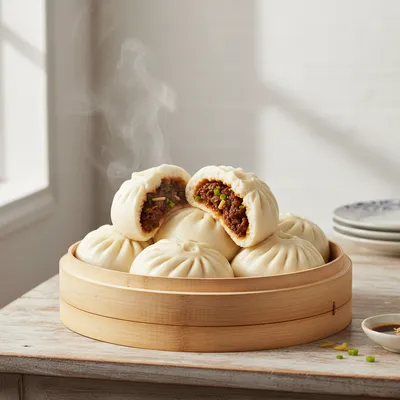
- Soft, savory, and gently sweet from the dough. The filling is rich and well-seasoned, like a seasoned meatball encased in the softest, fluffiest bread you've ever touched.
- Texture
- Pillowy soft, cloud-like steamed bread exterior with a juicy, savory meat filling inside
- Spice Level
- Not spicy
- Temperature
- Served Hot
Ingredients
Allergens
Confirmed
The story
Baozi are China’s universal grab-and-go breakfast, eaten by hundreds of millions of people every single morning. These steamed filled buns date back over a thousand years, and legend attributes their invention to the famous strategist Zhuge Liang during the Three Kingdoms period. Every neighborhood has a baozi shop or street stall, usually identifiable by the towering stack of bamboo steamers billowing steam into the morning air.
What to expect
Round, white, puffy buns arrive in a bamboo steamer, each one pleated on top like a tiny pinched pouch. The dough is soft, pillowy, and slightly sweet: nothing like Western bread. It’s more like biting into a warm cloud. Inside, you’ll find a generous ball of seasoned pork filling that’s juicy and savory, flavored with ginger, green onion, and soy sauce. Some baozi release a small gush of flavorful broth when you bite in, so be prepared.
Beyond pork, you’ll find baozi with all sorts of fillings: vegetables, mushrooms, sweet red bean paste, or custard. The pork version (鲜肉包) is the most common and the best starting point. The experience is simple and satisfying: warm, soft, filling, and comforting in the way that only a freshly steamed bun can be.
Tips
The best baozi are eaten fresh from the steamer: don’t let them sit. Bite a small hole in the top first to let steam escape and avoid burning your mouth. Many locals eat baozi with a bowl of congee or warm soy milk for a complete breakfast. If you see a line at a morning baozi stall, join it: the line means fresh, hot batches are coming out regularly. Two or three buns make a satisfying breakfast for most people.