Chairman Mao's Red Braised Pork: The Revolutionary's Favorite
Quick Info
- Flavor
- Rich, sweet-savory with caramel depth. Think sticky BBQ ribs meets pot roast, with a gentle warm-spice background.
- Texture
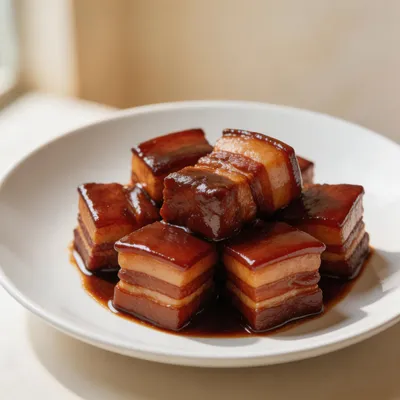
- Meltingly tender pork belly cubes that dissolve on your tongue, coated in a glossy, sticky-sweet sauce
- Spice Level
- 🌶️ — Just a whisper of heat, less than a mild salsa
- Temperature
- Served Hot
Ingredients
Allergens
Confirmed
Possible
These ingredients may vary by restaurant. Ask your server to confirm.
The story
Red braised pork is Hunan’s most politically famous recipe. Chairman Mao Zedong was born in Shaoshan, a small village in Hunan province, and by all accounts he was obsessed with red braised pork belly. The story goes that he ate it throughout his life and claimed it fueled his thinking. The “Mao-style” version differs from other red braised pork recipes: in some traditional preparations, it omits soy sauce and uses caramelized sugar and chili for color and flavor, though most restaurant versions today use soy sauce freely.
In Changsha, people are proud of this dish. It appears on virtually every Hunan restaurant menu and is considered the signature dish of the province’s capital.
What to expect
A plate of glistening, mahogany-colored pork belly cubes arrives, each piece about the size of a large marshmallow. The sauce is thick and lacquered; it clings to every surface. When you bite in, the fat has rendered down to a silky, almost gelatinous texture that melts instantly, while the lean meat stays tender and pulls apart easily. The flavor is deeply sweet and savory, like the best caramelized meat glaze you have ever tasted, and warm spices linger in the background.
The skin layer on each piece adds a slightly chewy contrast. Do not be put off by the visible fat; after hours of braising, it has transformed into something entirely different from raw fat.
Tips
Eat this over white rice. The sauce is intensely rich and sweet, and the plain rice balances everything. Scoop extra sauce onto your rice; it is the best part. It’s not spicy by Hunan standards, so it’s a safe entry point if you’re nervous about Hunan cuisine’s fiery reputation. Pair it with a simple vegetable dish to cut the richness.