Eight Treasure Rice
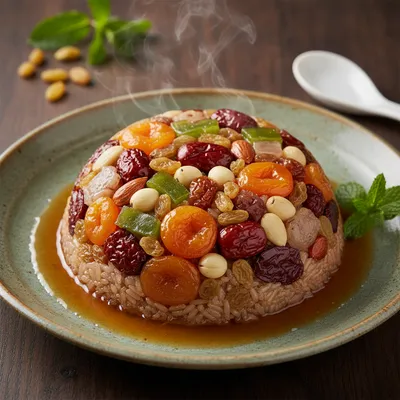
Quick Info
- Flavor
- Sweet, fruity, and comforting. It's like a warm rice pudding meets fruitcake: rich with dried fruits and a red bean paste center.
- Texture
- Sticky, dense glutinous rice studded with chewy dried fruits and nuts, with a smooth, sweet bean paste filling
- Spice Level
- Not spicy
- Temperature
- Served Hot
Ingredients
Allergens
Confirmed
Possible
These ingredients may vary by restaurant. Ask your server to confirm.
The story
Eight treasure rice is the grand finale of a traditional Shanghai banquet and a customary dessert during Chinese New Year. The “eight treasures” refer to the eight different dried fruits, nuts, and candied ingredients arranged in a decorative pattern on top. The number eight is considered the luckiest number in Chinese culture (it sounds like the word for “prosperity”), and the dish is a symbol of abundance and good fortune.
The dish has ancient roots: some versions of its origin story date back over three thousand years. Traditionally it was a labor of love: you assembled it carefully in a bowl, steamed it, and then dramatically flipped it upside down to reveal the decorative pattern, like an edible dome of jewels.
What to expect
A dome-shaped mound of glossy sticky rice arrives, its surface decorated with a mosaic of colorful dried fruits and nuts: red dates, golden goji berries, pale lotus seeds, and dark walnuts. When you break through the sticky rice exterior, you discover a hidden core of sweet red bean paste.
The rice is dense, chewy, and lightly sweetened, enriched with a small amount of lard or butter that gives it a silky quality. Each bite brings different textures: the chewiness of dried fruit, the crunch of a walnut, the smooth sweetness of the bean paste filling. It is much richer than it looks, and a few spoonfuls go a long way.
Tips
Eight treasure rice is a shared dessert: one portion serves three to four people. It arrives at the end of the meal, so save room for it. The red bean paste center is the highlight, so make sure everyone gets some with their scoop of rice. If you see this on a New Year or banquet menu, order it: it is a festive tradition and a wonderful way to end a meal.